




Guide
Solar, security or decorative: which commercial window film does your building need?
Updated October 2026
How do I choose the right window film for a commercial building?
Choose film by the problem, not by the product. Most commercial buildings have more than one goal, and different areas of the same building often need different film.
Walk the building and write down what each space needs. A west-facing office floor may struggle with afternoon glare, a ground-floor storefront may need protection from break-ins and tagging, a clinic may need privacy in exam rooms, and a lobby may need a branded finish on glass partitions. Each of those points to a different film family. Grouping the building by need makes the conversation with an installer faster and helps you compare options fairly.
When is solar control film the right choice?
Solar control film is the right choice when heat and glare through the glass are the main complaint. It is designed to reduce the solar heat and glare that reach the interior while keeping the view.
Typical signs are screens that are hard to read near windows, hot spots near glass, blinds that stay closed all day, and occupants moving desks away from windows. Solar control film comes in a range of appearances, from fairly clear to more reflective or darker. The right option depends on the glass type, the window orientation, how the building looks from outside and any property appearance standards. Because results depend on the specific glass and building, an on-site assessment is the reliable way to narrow the choice.
What does security and safety film do?
Security and safety film is designed to help hold glass together if it breaks. It is used where breakage, forced entry or occupant safety is a concern.
Common locations include ground-floor storefronts, glass doors, sidelights, schools, public buildings and areas near high foot traffic. Safety film helps keep broken glass from falling into a space, while thicker security films are aimed at slowing someone trying to break through. How the film is attached at the edges matters as much as the film itself, so the installation method should be part of the discussion. Security film is not a replacement for locks, alarms or other measures; it is one layer of protection.
When should a business use privacy or frosted film?
Use privacy or frosted film when people should not see into a space but daylight should still come in. It diffuses the view while keeping rooms bright.
Conference rooms, exam and treatment rooms, HR offices, ground-floor offices facing the street and restroom windows are typical uses. Film can cover a full pane or run as a band at eye level, which keeps the room open while blocking the direct line of sight. Frosted film can also include cut-out patterns or logos, which blends privacy with branding. For medical and dental offices, privacy film is often one of the first glass requests.
What is decorative and branded window film for?
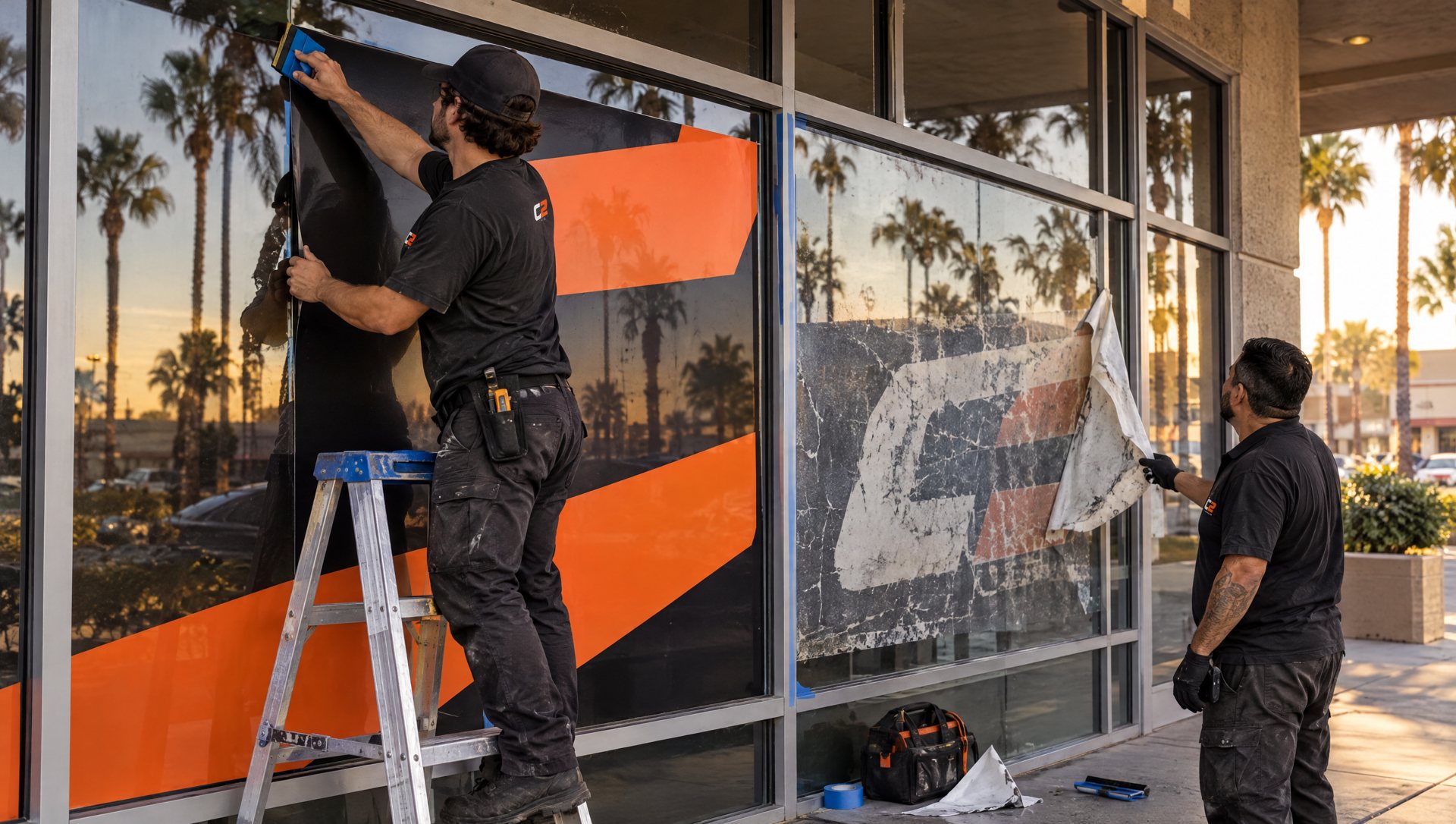
Decorative and branded film changes how glass looks. It adds patterns, gradients, textures or logos to glass partitions, doors and storefronts.
Offices use it to carry brand standards across meeting rooms and hallways. Hotels, restaurants and multi-family lobbies use it to finish glass without replacing it. Decorative film is also a practical way to mark glass doors and partitions so people notice them. Because it is a design element, layouts should be proofed against measured glass, and the same artwork can be repeated across floors or locations for consistency.
Do I need anti-graffiti film?
Consider anti-graffiti film if glass is being scratched, etched or tagged. It is a clear sacrificial layer: the film takes the damage and is replaced instead of the glass.
It is common on storefronts, transit-adjacent buildings, elevators, mirrors and glass in public areas. The film is designed to be removed and reapplied over time, so it is helpful to plan for periodic replacement on surfaces that see repeated vandalism.
Can one building use more than one type of film?
Yes. Many commercial buildings mix film types by area: solar control on upper floors, security film on the ground floor, privacy film in specific rooms and decorative film on interior partitions.
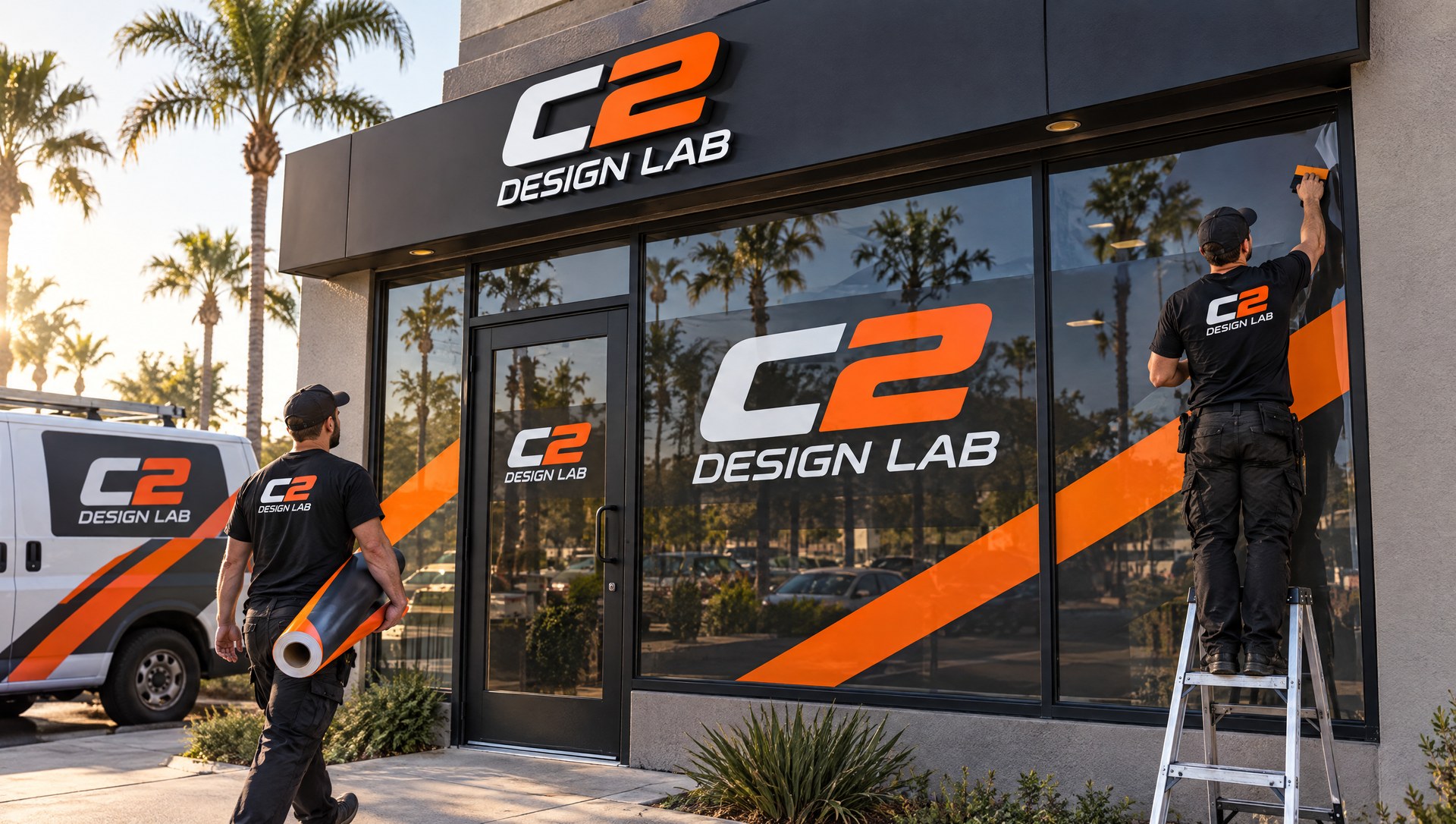
Film can also be combined with window graphics such as door lettering, hours and promotional displays. Planning these together avoids conflicts, keeps the look consistent and lets one team schedule the work around your operations.
What should I do before choosing a film?
Gather the basics: building address, building type, photos of the windows, which areas have which problem, and any existing film. Check whether your lease, property manager or association has rules about exterior glass appearance.
Then arrange a site survey. Glass type, condition and existing film affect which products are suitable, and an installer can only confirm options and pricing after seeing the building.
Related services
Planning a project? See our capabilities or request a commercial quote.